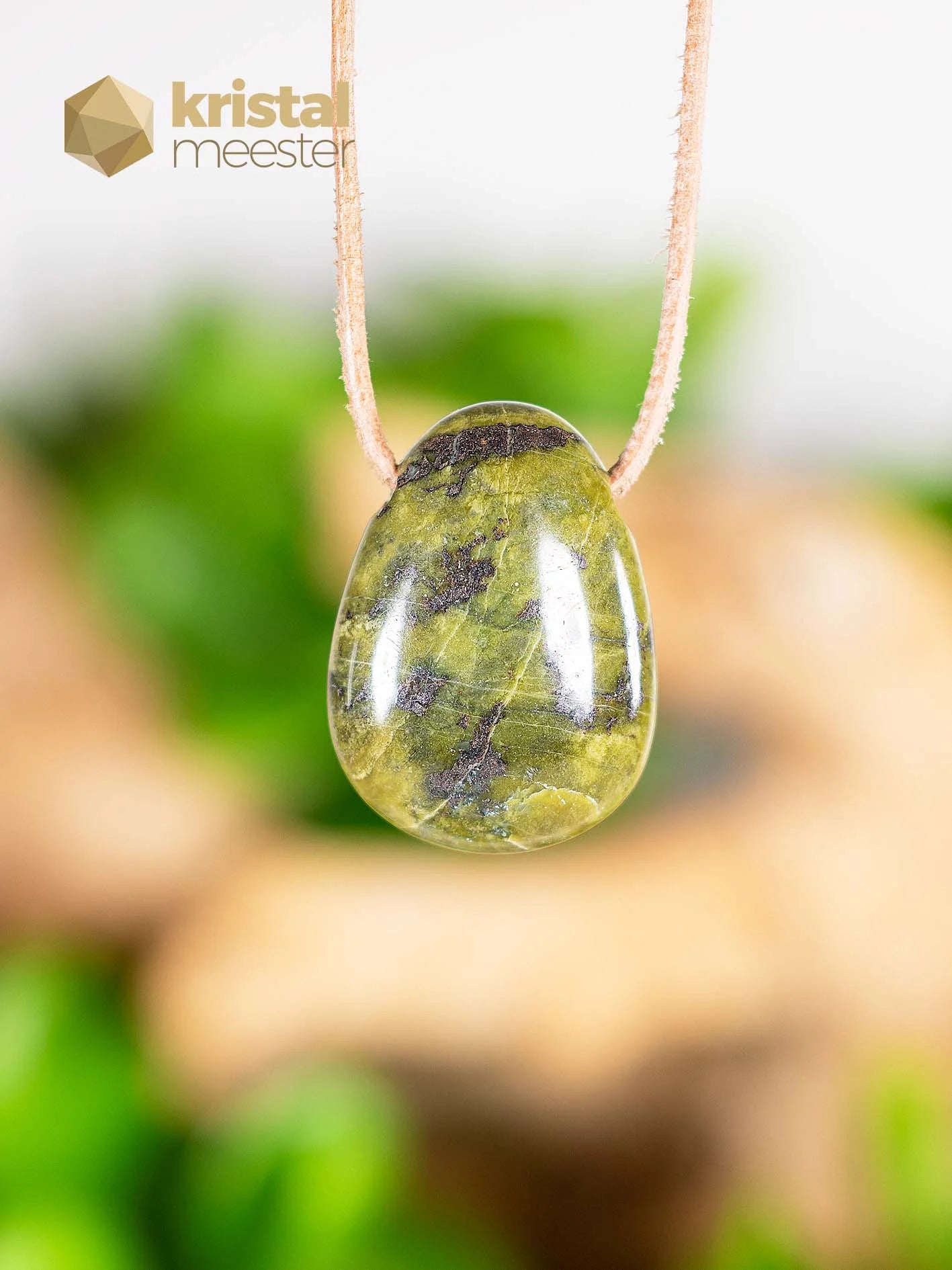
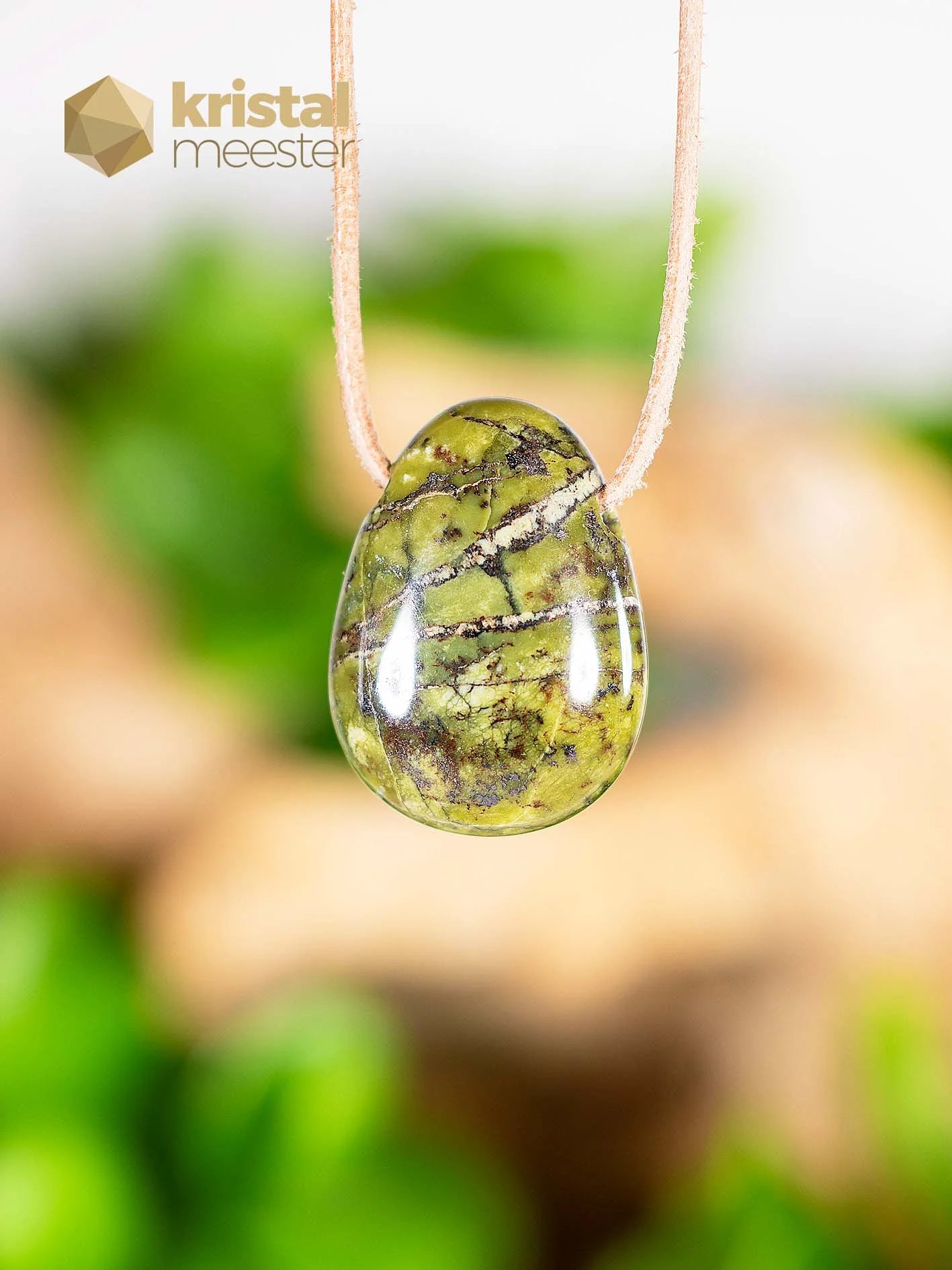
Serpentine: The Green Stone of Serpent Power
Do you feel stuck in a chapter that should have closed long ago? Serpentine is the gemstone that gently sets things in motion again. Its green, often mottled color recalls the skin of a snake, and that image matches its properties: letting go of what no longer fits and making room for what comes next. Many people reach for Serpentine when their energy feels sluggish, when old habits keep clinging on, or when change brings more tension than excitement. In this overview you will read where Serpentine comes from, how it works, and how to use it in everyday life.
What is Serpentine?
Serpentine is not a single mineral but a group of related magnesium silicates with the formula Mg3Si2O5(OH)4. Its best known members are Lizardite, Antigorite and Chrysotile. They form through serpentinization: hot water penetrates olivine rich rock from the earth's mantle and rebuilds it mineral by mineral. This happens beneath the ocean floor and in subduction zones, after which pieces of that altered mantle rock are pushed against continental margins. Traces of iron give the stone its green to yellow green color, while nickel and chromium add further tones. With a hardness of 2.5 to 5.5, Serpentine is fairly soft, which makes it easy to carve and polish to its characteristic waxy sheen.
Meaning and History of Serpentine
The name was established in 1564 by the German mineralogist Georgius Agricola, derived from the Latin serpens, meaning snake. The mottled green markings reminded him of snakeskin. The stone itself had already been in use far longer. From around 3500 BCE, Mesopotamian craftsmen carved cylinder seals from it: the slightly greasy surface kept clay and wax from sticking to the seal. The Greek physician Dioscorides described in the first century a green stone carried as protection against snakebite, and the Romans clad columns and walls with this material under the name lapis atracius. That long line of protection and renewal still echoes in the meaning Serpentine carries today: the courage to leave your old skin behind.
Physical Properties Serpentine
On an energetic level, Serpentine is seen above all as a stone of movement. Where energy has come to a standstill, it is used to help that flow start again, so your body can feel lighter and more supple. Many people reach for it during periods of listlessness, when everything takes just a little more effort than usual. It gives the sense that the battery is slowly filling again rather than draining further.
Serpentine is also valued for its grounding effect. During inner restlessness it helps you return to your body and your breathing, allowing built up tension to settle. Its soft green color makes it a stone people like to keep within reach to unwind after a full day. Those who wear it often notice that a deep, calm breath comes more easily.
Please note: gemstones can offer support on an emotional and energetic level, but are never a substitute for medical or professional care. If you have any complaints or concerns, always consult your physician.
Serpentine and Life Energy
Serpentine is the stone people reach for when their life energy runs sluggish. To use it for that purpose, place a tumbled stone or a rough piece on your lower abdomen and a second one on your breastbone, then rest for ten to fifteen minutes with your attention on your breathing. This way you work upward from below, exactly the direction the literature attributes to this stone. If you would rather have support all day, choose a bead bracelet or a pendant that rests at chest height. If mornings are when you feel slowest, place a donut or a rough piece beside your bed so the stone is the first thing you touch. On a desk, a larger rough chunk does good work during long days, reminding you to sit up straight and breathe again.
Spiritual Properties
Spiritually, Serpentine is perhaps most strongly connected to Kundalini: the life energy that, according to Eastern traditions, rests coiled at the base of the spine like a snake. Serpentine is seen as a stone that gently wakes this dormant force and lets it move upward along the energy centers. Precisely because it is grounding at the same time, it is valued in this kind of inner work: it connects intense experiences with your daily life, so you do not feel as though you are losing yourself.
The image of the snake shedding its skin also fits the emotional properties many people attribute to Serpentine. It is known as a stone of renewal that helps you let go of old fears and outdated convictions. Anyone in the middle of a change often finds in it a calm companion, one that shows how letting go and beginning again are simply part of life.
Serpentine is also widely used to reconnect with nature. It forms deep in the earth's mantle and carries something original with it. Meditating with this stone is experienced by many as returning to something familiar: calmer, slower and closer to yourself.
How to Use Serpentine?
- Wear Serpentine as jewelry, for example as a pendant or bead bracelet from the Serpentine collection, so the stone stays in contact with your skin all day.
- Place a rough piece or a larger tumbled stone in the living room or bedroom, somewhere you often come to rest.
- Hold a tumbled stone in both hands during meditation, or rest it on your lower abdomen, and focus your attention on your breathing.
- Slip a small tumbled stone loose into your pocket during a period of change, so you can hold it whenever you need it.
Types and Varieties of Serpentine
- Lizardite: the most common member of the Serpentine group, soft and green to yellow green in color. Named after the Lizard peninsula in Cornwall.
- Antigorite: the hardest member of the group, at 3.5 to 4 on the Mohs scale. This variety is compact and sometimes translucent, which is why it is most often used in jewelry.
- Bowenite: a translucent, apple green Antigorite, also sold internationally as New Jade.
- Chrysotile: the fibrous variety of the group. For health reasons it is not used in jewelry.
- Atlantisite: a combination of green Serpentine with purple Stichtite, originally from Tasmania and instantly recognizable by its color contrast.
- Mamba Stone: a trade name for dark green Serpentine, available in the collection as a donut and as a pendant.
Beautiful Gemstone Combinations
Moldavite
Moldavite is known as one of the most activating stones there is, and it amplifies the upward movement Serpentine is valued for. In this pairing, Serpentine supplies the calm, grounding base layer that Moldavite lacks. Together they are often chosen by people who want to move through a change deliberately without running ahead of themselves. Build up wearing these two slowly.
Amethyst
Amethyst brings calm and clarity to the mind, while Serpentine keeps the energy in the body moving. That division makes the duo pleasant to work with: movement below, perspective above. Anyone occupied with meditation or inner work often notices that Amethyst orders the impressions Serpentine loosens.
Hematite
Hematite is one of the most strongly grounding stones and forms a solid counterweight to the activating side of Serpentine. Where Serpentine gets the flow going, Hematite keeps both your feet firmly on the floor. This combination is especially valued by people who become ungrounded or overstimulated quickly.
Recognizing Genuine Serpentine
Serpentine is rarely faked, but there is a great deal of confusion around its name. It closely resembles Jade and has therefore been sold for centuries as a cheaper alternative, under trade names such as New Jade, Teton Jade and even simply jade. The difference lies mainly in hardness: at 2.5 to 5.5, Serpentine is noticeably softer than Jade and scratches more easily. Luster helps too: Serpentine polishes to a waxy, slightly greasy sheen, while Jade looks far harder and feels glassier. Watch out as well for dyed material, where color collects in cracks and grooves. Glass gives itself away through air bubbles, an even color without veining and a cooler yet smoother finish. A stone offered as jade at a strikingly low price is reason to be critical.
Properties
- Hardness: 2.5 to 5.5 (Mohs scale)
- Density: 2.5 to 2.6 g/cm³
- Composition: Mg3Si2O5(OH)4
- Crystal structure: Monoclinic
- Color: Green, yellow green, olive green, brown, gray
Locations
- United States
- Canada
- Italy
- Greece
- Russia
- China
- New Zealand
Zodiac Signs
Gemini
Gemini has a strong bond with Serpentine, because this sign is forever building bridges between opposites. Serpentine helps Gemini connect the busyness in the head with a calmer feeling inside. In doing so it supports the flexibility this sign is known for, without letting it tip into restlessness.
Virgo
Virgo feels responsible quickly and can therefore find it hard to let go. Serpentine invites this sign to be gentler with itself and to stop arranging every last detail. Its grounding effect suits the practical nature of Virgo well.
Scorpio
Scorpio is all about depth and renewal, and that is exactly where Serpentine fits in. The image of the snake shedding its skin mirrors the process this sign knows so well. Serpentine supports Scorpio in meeting change with confidence rather than resistance.
Chakras
Root Chakra
The Root Chakra is where tradition places the resting Kundalini, which makes it the natural starting point for Serpentine. It helps you feel safe and rooted, so you can grow from a solid base. That sense of stability makes it easier to face change.
Heart Chakra
Through its green color, Serpentine resonates strongly with the Heart Chakra. It is associated with emotional healing, gentleness and the softening of old sorrow. An open Heart Chakra makes it simpler to look at yourself and at others with love.
Crown Chakra
When life energy moves upward, it eventually reaches the Crown Chakra. There, Serpentine supports the feeling of connection with something larger than yourself. At the same time it helps bring those insights back into ordinary daily life.
Care
Serpentine is a relatively soft stone and asks for a careful hand. Do not cleanse it under water: the surface can grow dull and damages fairly easily. A soft, dry cloth is enough to remove dust and fingerprints. Store it separately from harder stones such as Quartz, for example in a soft pouch, so no scratches appear. Brief daylight is no problem, but do not leave it for hours in bright sun, as the green color may fade over time.
To cleanse Serpentine energetically, place it on a bed of Hematite Chips, which take over the energy it has absorbed. Charge it by leaving it in the moonlight or setting it on a layer of Rock Crystal Chips. The gentle smoke of Sage or Palo Santo is a mild way to refresh it in between, with no water involved.
More information about the cleansing and charging of gemstones can be found in our blog "The cleansing and charging of gemstones".
Frequently Asked Questions about Serpentine
What does Serpentine mean?
The name comes from the Latin serpens, meaning snake, and refers to the mottled green markings that recall snakeskin. Symbolically, Serpentine therefore stands for renewal: shedding what no longer fits. It is also strongly linked to the life energy within the body.
Can Serpentine get wet?
No, it is better not to cleanse Serpentine under water. It is a soft stone whose surface can grow dull and damages easily. Use a soft dry cloth instead, or Hematite Chips, or the smoke of Sage or Palo Santo.
Can Serpentine be placed in sunlight?
Brief daylight is fine, but do not leave it for hours in bright sun. The green color may fade over time. For charging, moonlight or a layer of Rock Crystal Chips is the safer choice.
Which Chakra is associated with Serpentine?
Serpentine is linked above all to the Heart Chakra, thanks to its green color and gentle emotional properties. It also works on the Root Chakra, where tradition places the starting point of life energy, and on the Crown Chakra. In this way it bridges the lowest and highest energy centers.
Where is the best place to put Serpentine?
Place Serpentine somewhere you come to rest, such as your nightstand or the living room. For focused use, rest it on your lower abdomen or breastbone while lying down. On a desk, a larger rough chunk works well during long days.
Summary
Serpentine is a stone of movement and renewal. It gets stalled energy going again, grounds you during restlessness and helps you release old patterns, much as a snake sheds its skin. Spiritually it is connected to Kundalini and to the path from the Root Chakra upward to the Crown Chakra. With its soft green color it aligns beautifully with the Heart Chakra and offers support to anyone stepping into a new phase with confidence.
If you have any questions about Serpentine, please do not hesitate to contact Kristalmeester. We are happy to help.